It’s April and if you haven’t already planted outside, gambling on the variable winter weather we have had, now is a good time to get the edible gardening going. The air and ground are warming, buds are fattening and early planters may soon be enjoying some garden produce. If you haven’t gotten started yet, April is a great time to plant cool weather vegetables. Given the revised average last frost dates of April 5-15 in Hardiness Zone 7b, outdoor planting is definitely underway. However, weather variability makes it important to monitor near term forecasts and be prepared to protect sensitive plants if an unexpected freeze comes along.
Let’s review a number of spring actions that can help get your garden off to a good start this year.
Bed Preparation
As mentioned in previous articles, deep tilling is no longer a recommended practice, except for new beds where loosening compacted soils and integrating organic matter can make sense.
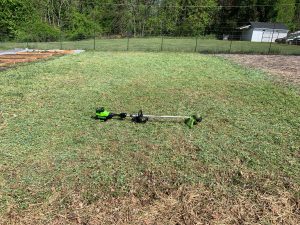
If you grew a cover crop over the winter, let it grow as long as possible, ideally cutting it after flowering, prior to seed formation. Late cutting (photo above) enables deepest root penetration to loosen soil and greatest photosynthetic carbon deposits. Since the plants have spent a lot of energy to flower and start creating seeds, they are generally too weak to regrow after cutting. To remove the crop, cut it as close to flush with the soil as possible, with a string trimmer or mower. The residue is best left in place as a mulch or removed and composted. Give the roots a couple of weeks to start decomposition and then plant. If you want a smoother seed bed or can’t wait long enough to remove the cover crops post flowering, use a stirrup hoe (some call it a scuffle hoe) to cut the crowns, just below soil level. Leave them as mulch or add the greens to compost.
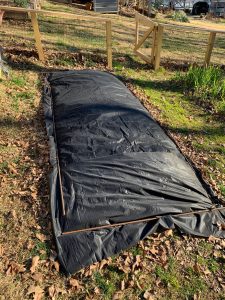
Occultation is a no-dig alternative for weed control. It involves moistening the soil prior to covering beds with a black plastic tarp or landscape fabric for 4-6 weeks or longer. This will allow seeds to germinate prior to killing them and pre-existing weeds as they receive high heat while denied further sun and moisture. When ready to plant, remove the tarp and plant transplants directly. If seeding, loosen planting rows while using residue as mulch or composting it.
Solarization is a similar practice that uses clear plastic tarps. Solarization allows sun to reach plants, but gets weeds hotter than occultation and can kill them a bit faster. The downside is that the clear plastic also breaks down faster, requiring tarp replacement more often. Consider the tradeoffs when picking a technique.
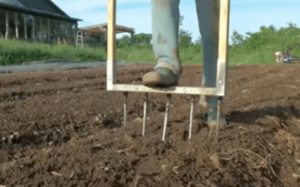
To loosen compacted soil, drive a digging fork or broadfork as deeply into the soil as possible and rock it back and forth to loosen soil without destroying structure. Work your way across the beds. If adding an amendment like compost or manure, layer it on top and allow it to work into the soil during broadforking. Rake the surface smooth, and you are ready to seed.
Planting
If starting from seed, follow packet directions. For intensive or square foot gardening, ignore the row spacings and use seed-to-seed spacing in both directions. The goal is to space plants so that mature plants will just touch each other, shading the soil to reduce moisture and weed pressure while maximizing production for a given space.
Soil nutrition is important for best growing results. If you have had your soil tested this year, follow recommendations. In any case, for guidance on what products to use and how and when to apply them, review Garden Shed article A Fertilization Primer.
According to Virginia Cooperative Extension’s Virginia’s Home Garden Vegetable Planting Guide, in Hardiness Zone 7b, there is still time to plant cool weather crops, including: beets, broccoli, cabbage family items, carrots, various greens, and lettuces, onions, potatoes and turnips. Mid-April is the suggested planting time for bush and pole beans, cucumbers, eggplant, melons, squash and tomatoes. However, these plants are harmed by frost, so check the longer-term weather forecast before setting them out or planting. Be prepared to protect them if a late frost arrives.
A Few Tips
- Where possible, rotate your crops, on a 3-4 year cycle to minimize pressure from soil borne diseases and pests.
- Maintain a journal to record planting dates, crop locations, varieties planted, pest and disease issues, and growing success. You will be thankful when you plant next year.
- Plant seeds at a depth of about 2 times the seed width (not length). Moisten when planting and keep moist until germination.
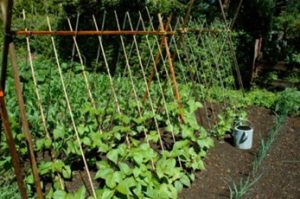
- Trellises are a great way to save space and keep plants off the ground. VCE publication Vertical Gardening Using Trellises, Stakes and Cages offers guidance for a variety of space-saving plant supports.
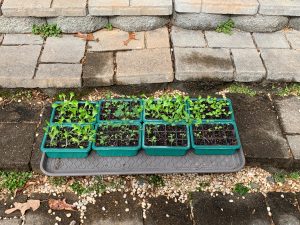
- If you started seeds indoors, remember to harden the plants off by progressively exposing them to the outdoors for 1-2 weeks when outside temperatures are above 50 degrees, before transplanting.
- It is best to transplant on a cloudy day or in late afternoon to reduce shock to young plants.
- If transplanting peat pots, tear off the top of the pot to a point below the soil line to avoid wicking water away from plant roots.
-
- Mulching plants after transplanting or germination is a good thing but give the soil a chance to warm up before mulching to avoid slowing plant growth.
- When laying out plant locations, remember that leafy greens typically require 6 hours of sun per day while fruiting vegetables want at least 8 hours.
- Consider intercropping, mixing multiple plant varieties to use space efficiently while adding diversity to the garden environment, creating a variety of scents that can confuse pests, and attracting a broader array of beneficial predators, helping reduce pest damage.
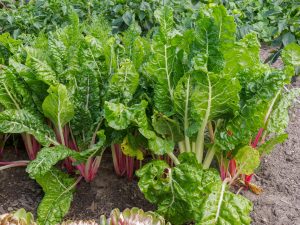
- If you would like to extend the harvest season for your greens, consider chard. Chards have a lower tendency to bolt and can withstand summer heat longer than most other greens. In addition, rainbow chard makes a pretty presentation in the garden.
- If a surprise late frost threatens your warm weather crops, a row cover can save the day. Review the Garden Shed article: Row Covers: A Garden Season Extender with Benefits for material and construction tips.
- It isn’t too late to plant asparagus or strawberry patches. For guidance on starting asparagus refer to the Garden Shed article Spear Into Spring with Asparagus, and the VCE publication Asparagus, which specifies recommended cultivars for Virginia. For strawberries try Garden Shed article Strawberry Basics for the Home Garden.
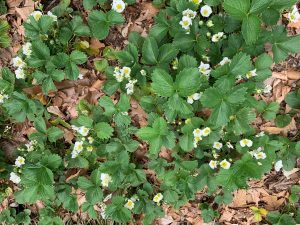
- For small fruits more broadly, check out the VCE publication Small Fruit in the Home Garden.
- If you are planning a home orchard, check out the VCE publication Tree Fruit in the Home Garden for help in site selection, tree selection and care for many popular fruits.
- Best tree planting techniques for both bare root and root ball trees is detailed in Planting Trees Correctly from the Clemson Extension.
- If you are curious about the weeds in the garden or its surroundings, for elimination or edibility, VCE’s Weed Identification Guide is a good resource.
I hope you find this information helpful. Comments on content are welcome. In any case, enjoy getting your garden growing. I hope to see you next month at the Garden Shed.
Featured Photo: Edible Garden in April: Photo: Ralph Morini