World Nature Conservation Day is observed annually on July 28. This day is dedicated to raising awareness about the importance of protecting our planet’s natural environment and resources – our water, air, sunlight, soil, minerals and fuels. Although these resources are around us in nature, we may not fully recognize the impact we have on them. With a worldwide population of approximately 8 billion, we are depleting the Earth’s natural resources at a rapid pace. This day serves as a reminder to educate ourselves about our individual responsibilities to conserve and protect our natural resources and the environment. The foundation for a healthy society is a healthy environment for the well-being and stability of both current and future generations. What does it mean to conserve nature? Conservation means using resources wisely and adopting sustainable, eco-friendly practices that balance our needs with environmental preservation. World Nature Conservation Day highlights the importance of protecting the vast variety of life on earth and preserving biodiversity and ecosystems that are critical for ecological resilience. What can individuals do? The good news is that individual actions collectively can make a significant impact. Here are some simple, practical ways we can contribute to nature conservation: 1. Conserve water. Water is the essence of life and a precious, limited resource on our planet. Only three percent of the earth’s water is fresh, and out of that only 0.5% is readily available to meet the needs of a growing global population and the rising demands of agriculture and industry. Learn more about the global water crisis. Be mindful of your water usage. There are simple things you...
The Piedmont Master Gardeners Association provides science-based horticulture and gardening information to the community of Albemarle County and the City of Charlottesville.
Resources
Events
Programs
Help Combat Food Insecurity
Our program helps you put your garden’s extra bounty
to good use by sharing it with these local food banks and food pantries.
Upcoming PMG Events
There are no upcoming events at this time
Get our monthly newsletter delivered straight to your inbox
Join us in The Garden Shed
Please Excuse Our Work-in-Progress
Please bear with us as we restore photos and finish the update to our archived newsletters and blog posts.
While some photos are missing, article content is still available in past issues and posts.
A Lifetime of Learning
Enjoy our latest articles below
Timely Topics
Having a cup of joe? Thank a pollinator!
(Posted June 18, 2025) Did you have a cup of coffee this morning? A banana or blueberries with your cereal? Then thank a pollinator. This week—June 16-22—is National Pollinator Week, a time to celebrate all the essential gifts that pollinators bring to us, including a lot of what we typically have for breakfast. According to the U.S. Department of Agriculture, three-fourths of the world’s flowering plants and about 35 percent of the world’s food crops rely on animal pollinators to reproduce. This means that one out of every three bites of food we eat depends on creatures such as bees, butterflies, moths, and beetles, as well as birds and bats. Apples, strawberries, melons, peaches, potatoes, vanilla, almonds, even chocolate—these are just a small sampling of food crops dependent on pollinators. Pollination—the transfer of pollen from the male part of a flower (anther) to the female part (stigma)—is necessary for plants to produce fruits and seeds. Some plants, such as pine trees and most other conifers, are wind pollinated. For many other plants, pollination happens when, say, a foraging bee or a nectar-seeking hummingbird accidentally picks up pollen from one flower and transfers it to another of the same species. It’s one of nature’s neatest tricks. Unfortunately, our pollinators are struggling. Habitat loss, disease, parasites, chemical pollutants, and weather extremes are all putting pressure on pollinator species, including honeybees and the approximately 4,000 native bee species found in our country. North American bumblebees have been especially hard hit, according to the U.S. Fish and Wildlife Service. Their numbers have dropped by nearly 50 percent since 1974. One factor in these...
Compost: Turn Your Garbage into Gold
May 4 through 10 is International Compost Awareness Week, aimed worldwide to raise public awareness on why we all should compost our organics and use compost in our yards and gardens to create healthier soil. This year, the Piedmont Master Gardeners are doing their part by launching free workshops on how to recycle home and yard waste into compost—to turn your garbage into gold. The outdoor classes showcase best options for composting in a range of settings, from small urban spaces to large rural properties. Geared to meet the needs of a wide audience, from families with children to adults of all ages, our workshops emphasize how every household can keep compostable waste out of landfills. Consult our Events page for future offerings. Why Is This Important? According to the Environmental Protection Agency, the U.S. sends more than 292 million tons of solid waste to municipal landfills in a single year. Over 50 percent of this waste is compostable, with food scraps alone accounting for more than 21 percent. When added to a landfill, food scraps decompose anaerobically (without oxygen) and release methane, a potent greenhouse gas that contributes to global warming. When composted and applied in the garden, food scraps contribute to healthy soil and plants and to cleaner water and air. What Is Composting? The composting process involves combining carbon-rich waste (fallen leaves, straw and woodchips, for example) and nitrogen-rich waste (food scraps and grass clippings, for instance) in the right proportions and with the right mix of air and moisture to promote decomposition. The result is a dark, earthy-smelling humus that is ideal for improving soil...
Ask a Master Gardener
Identifying, Preventing and Treating Termite Infestations
Question: Some of my neighbors in Central Virginia have reported termite damage on their properties. How can I tell if the insects I see are ants or termites? What measures can I take to prevent termite infestations? The Eastern subterranean termite, Reticulitermes flavipes, is the most common termite found in Virginia. Present in all 50 states except for Alaska, this insect pest causes approximately $5 billion dollars annually in damage each year to homes, historical sites and commercial buildings. Identifying termites Ants are often confused with termites because of their tendency to swarm at the same time of the year (March through June). However, the two are easily distinguished by differences in their antennae, body form and wing length. (See the table to the left). Subterranean termites live in colonies with an entire class or caste of termites performing a single specific task for the benefit of the entire colony. There are three main castes inside the colony: Each caste has a different appearance. The swarmers or “alates” are the adult winged termites that emerge in the spring and early summer from their nests in a swarm. They eventually develop into black wingless king and queen termites (also called reproductives), mate and start new colonies. A single queen can produce over 500 eggs in a year. While the king’s form, color and size remain unchanged, the queen’s abdomen becomes black and white striped as she prepares to lay eggs and grows from 0.25 to 0.5 inches in length. A secondary caste of cream colored reproductives may also develop and cause the colony to grow at a more rapid rate...
Controlling Groundhogs in the Garden
Question: Groundhogs have taken over my vegetable garden and eaten some crops almost entirely. How do I get rid of them and how do I prevent the problem from happening again? By Carolyn Huyghe, Piedmont Master Gardener Intern Gardeners work diligently to tend their vegetable gardens and eagerly anticipate a bountiful harvest of tasty produce. Unfortunately, they may find that groundhogs have eaten their prize produce and damaged other plants in their home landscape. Groundhogs (Marmota monax), also known as woodchucks or whistle pigs, are found in most of the midwestern and eastern U.S., except for some parts of the South and Southeast. They have become a more common problem as land has been cleared for residential and commercial development. While they prefer open farmland and the edges of forests, they have also adapted well to suburban areas. Their burrows are found in fields, pastures, along fences, roads, and near buildings. They are sometimes called whistle pigs because of the high-pitched sound used to warn the colony of danger. Description As the largest species in the squirrel family (Sciuridae) in North America, they weigh up to 14 pounds and are between 16-27 inches long, including a six-to-seven inch tail. Their stocky bodies are covered in a thick brown and reddish cinnamon-colored fur with white tips. Their eyes, ears and nose are located near the top of their heads and they have incisor-like teeth. Their short, strong legs, feet and tail are a darker brown. Juveniles are a slate gray color. Their droppings are medium size, oval in shape and brown or black, easily confused with other mammals of their...
Red Imported Fire Ants in Virginia
Question: Red imported fire ants (RIFA) have been reported in southeastern Virginia and some Virginia cities and counties have been placed under quarantine. Are these ants spreading to other areas in the State, including Albemarle County? What do we need to know about them? How are they being managed? Distribution and Dispersal Red imported fire ants (Solenopsis invicta) are present in southern States from Texas to Florida and north to Oklahoma, Tennessee and Virginia. The first fire ant infestation was discovered in Virginia in 1989 and a fire ant quarantine, established in tidewater Virginia in 2009, has been expanded twice. It currently covers 25 counties and cities. Four other counties have light infestations or small localized populations. RIFA establish new colonies through annual mating flights but longer distance dispersal is mainly through transportation of sod, soil and plant materials from infested sites to new locations. Fire ants were first reported in Albemarle County in November 2024. Environmental Impact This invasive species feeds on and damages agricultural crops, including corn, sorghum, other small grains, forage grass and citrus seedlings. The ants can also harm young trees by girdling them, injure farm animals and humans and reduce wildlife food sources. RIFA and the less common invasive black imported fire ant cause $6.7 billion annually in the U.S. The suitable habitat for imported fire ant colonization is estimated to continue to expand, due to a number of factors, including climate change. Identification Adult imported fire ants can be distinguished from other ants by their two-segmented pedicel (waist), two antennae with 10 segments ending in a two-segmented club, and a stinger at the...
Contact Our Help Desk
Get Involved
Meet Our Partners
Alert: Invasive Plants, Insects, and Diseases
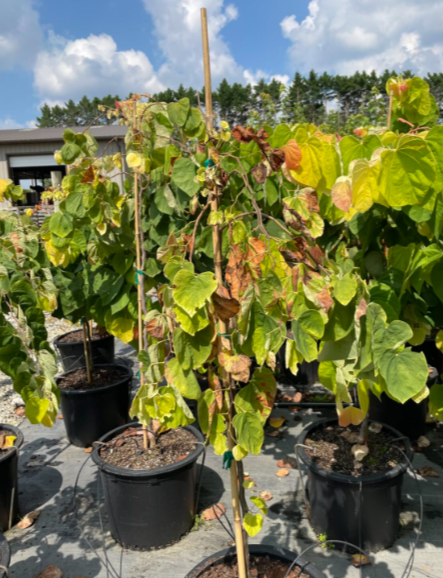
Vascular Streak Dieback: Threat to Redbuds and Dogwoods
You may wonder why you haven’t seen many flowering dogwoods (Cornus florida) or Eastern Redbuds (Cercis canadensis) in local nurseries lately. This is likely due to concern about Vascular Streak Dieback, a fungal infection attacking these and other trees.
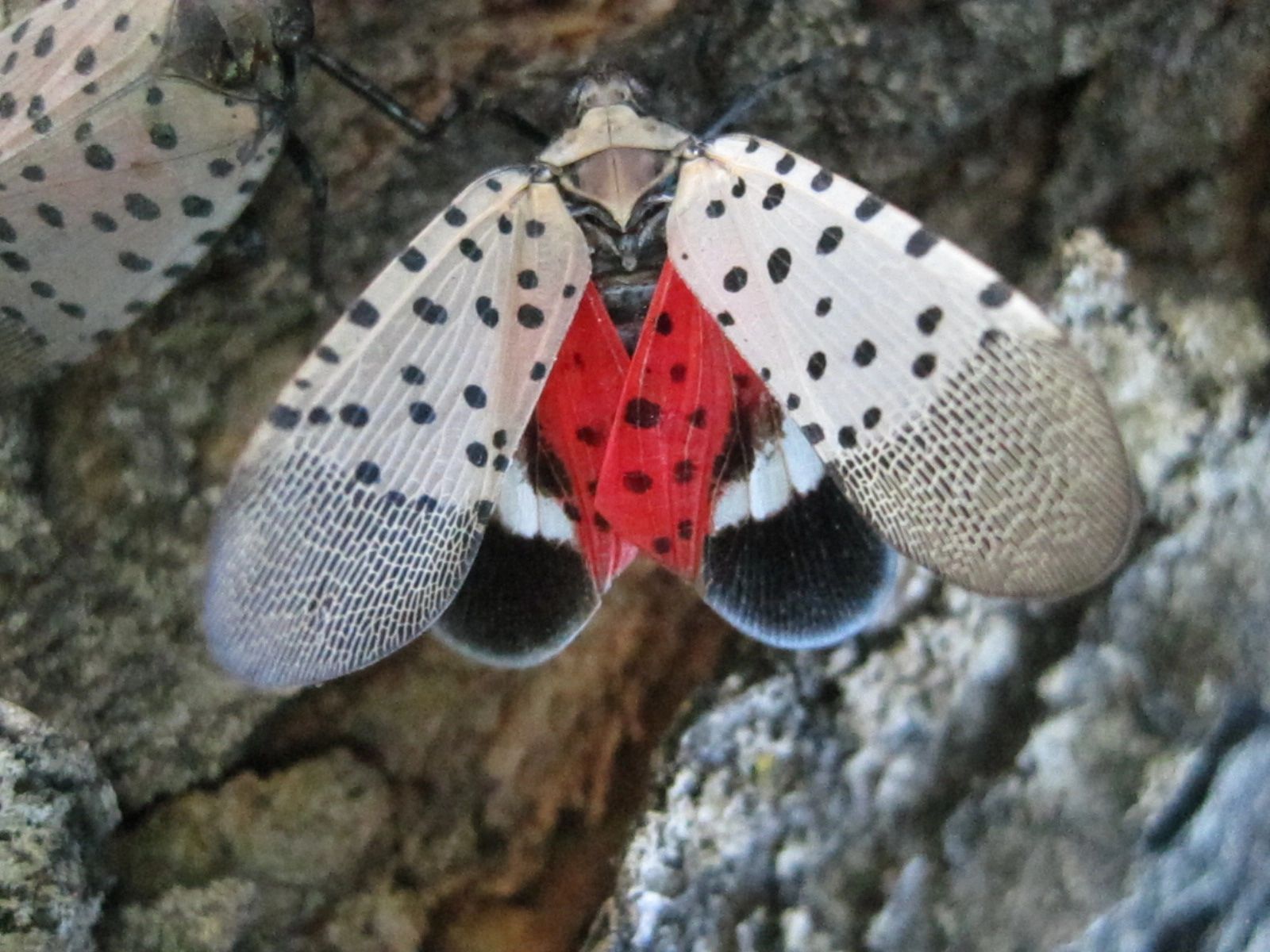
Spotted Lanternfly
The spotted lanternfly (Lycorma delicatula), a potentially serious pest of grapes, peaches, hops and a variety of other crops, is now widespread in the Charlottesville-Albemarle County area. It is no longer necessary to report sightings to Virginia Cooperative Extension. Also, the Virginia Spotted Lanternfly Quarantine is no longer in effect. Click this button to learn more about this pest and VCE’s management recommendations.
Red Imported Fire Ants
Red imported fire ants (Solenopsis invicta) entered Virginia in 1989 and were first reported in Albemarle County in November 2024. They swarm and attack aggressively when their colony is disturbed, posing a danger to humans and livestock. They also damage agricultural crops and can girdle young trees with their hills. For now, Charlottesville and Albemarle County remain outside the state’s recently expanded fire ant quarantine area. Click here to learn more about this invasive species and how to identify it.


